CNC Machine Tool HMI Terminal Solution
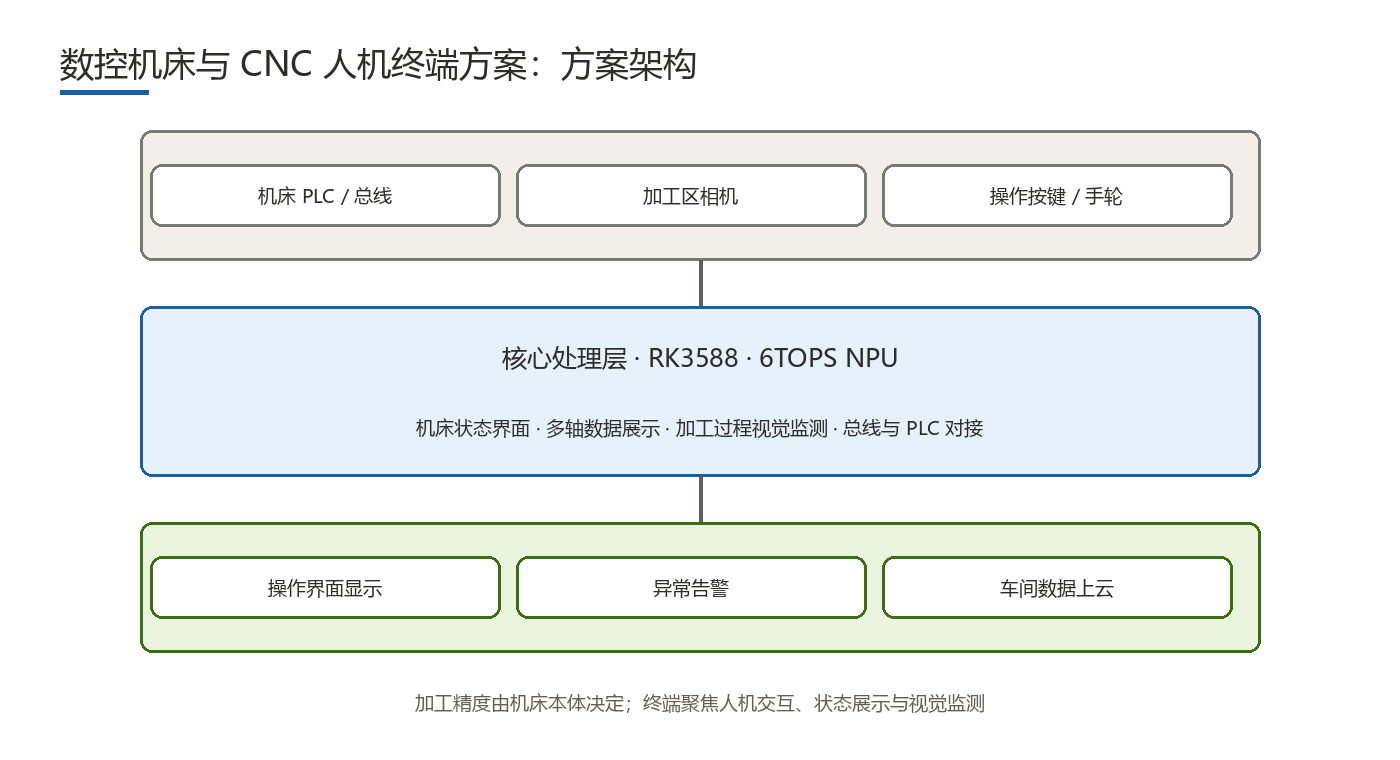
Machine operators need one terminal that shows the operation interface, multi-axis status and live machining video, while integration with the machine, industrial bus and PLC must not consume too much development time. Built on the RK3588 core board (4×A76 + 4×A55, 6TOPS NPU), this solution combines HMI, vision monitoring and bus integration, with full terminal customization for machine tool builders. Hongyin Tech offers a free requirement review and direct engineer access — receive selection advice within 48 hours.
Pain Points
- Operation interface and status information are split across screens, forcing frequent switching and inviting mistakes
- Tool wear and workpiece anomalies are watched by eye; a missed defect often scraps a whole batch
- Machines, PLCs and host systems use different protocols, making HMI-side integration labor-intensive and slow
- Vibration, dust, oil mist and temperature swings on the shop floor overwhelm consumer-grade tablets
- Different machine models need different interfaces, so terminal software is hard to reuse and costly to customize
Recommended Hardware Configuration
| SoC platform | RK3588 (4×A76+4×A55), handling concurrent UI rendering, multi-axis refresh and vision processing |
|---|---|
| AI computing power | 6TOPS NPU for on-device vision inference of tool and workpiece anomalies |
| Memory & storage | LPDDR4/LPDDR5 memory and eMMC storage for local process logs and image retention |
| Camera input | MIPI CSI and USB camera input for monitoring tools and workpieces in the machining area (multi-channel capable) |
| Display output | Optional HDMI/eDP/LVDS outputs tailored to industrial touch panels, supporting multi-screen or large-screen interaction |
| Network & industrial I/O | Gigabit Ethernet, RS485/RS232, CAN and optional bus interfaces for PLC and shop-floor networks |
Software Capabilities
- HMI framework: customizable operation interface and multi-axis status display, reusable and re-skinnable across machine models
- Vision monitoring: NPU runs tool-wear and workpiece anomaly models locally, alerting in real time and retaining images
- Bus and PLC integration: built-in common industrial bus and PLC protocols with point-table configuration and joint debugging
- Real-time stability: separated UI and acquisition threads with watchdog and self-recovery for continuous operation
- Data and O&M: local storage and upload of machining logs, with remote diagnostics and firmware updates to cut downtime
Deliverables & Services
- Free requirement review: defining machine models, axis count, bus/PLC and vision needs, with selection advice
- Hardware design: core board selection, carrier board customization, display and interface plan, wide-temperature and protective enclosure design
- BSP/driver/algorithm: OS tailoring, display and bus driver adaptation, vision model deployment
- Prototype integration: prototype build, real-machine and PLC integration, and field validation of vision monitoring
- Pilot and mass production: low-volume orders supported, with continuous supply and firmware maintenance
FAQ
Q:Why do CNC HMI terminals often choose the RK3588 platform?
Machine HMI terminals often run the operation interface, multi-axis status refresh and vision monitoring at once, demanding high concurrency. RK3588 uses 4×A76 + 4×A55 with a 6TOPS NPU, fitting these multitasking workloads and leaving headroom for future features. Lighter UI and vision needs may suit RK3576 — we reply with selection advice within 48 hours.
Q:How much does CNC HMI terminal customization cost?
Cost mainly depends on the SoC chosen, screen and interface configuration, enclosure protection level, whether vision monitoring is enabled, and order volume. The solution reuses interfaces across machine models to lower multi-model customization cost. We do not quote a flat price — send your machine models and axis count for an engineer assessment.
Q:Can the terminal integrate with the PLC and bus systems on our machines?
Yes. The solution supports common industrial bus and PLC protocols with point-table configuration and joint debugging; private protocols can be adapted during customization. Provide your PLC model and communication protocol docs at the requirement review stage, and our engineers will confirm integration feasibility within 48 hours.
Q:Can the terminal run reliably amid shop-floor vibration, dust and temperature swings?
The terminal is designed for industrial environments with wide-temperature components and fanless passive cooling, plus dust and oil-mist treatment and wide-voltage power. Exact protection rating and temperature range depend on the site; we run a prototype through continuous operation validation before scaling up. Machining accuracy is determined by the machine tool itself, not the terminal.
Related Technical Articles
Share your scenario and requirements — free requirement review, selection advice within 48 hours.
Get a Free Quote →